2020

School of Sex Ed’s Instagram account censored and deactivated by algorithms

School of sexuality education’s Almaz Ohene explores how internet policies around sexuality are consistently implemented in favour of straight, white, cis male ideas of acceptability

Vulva:Censored

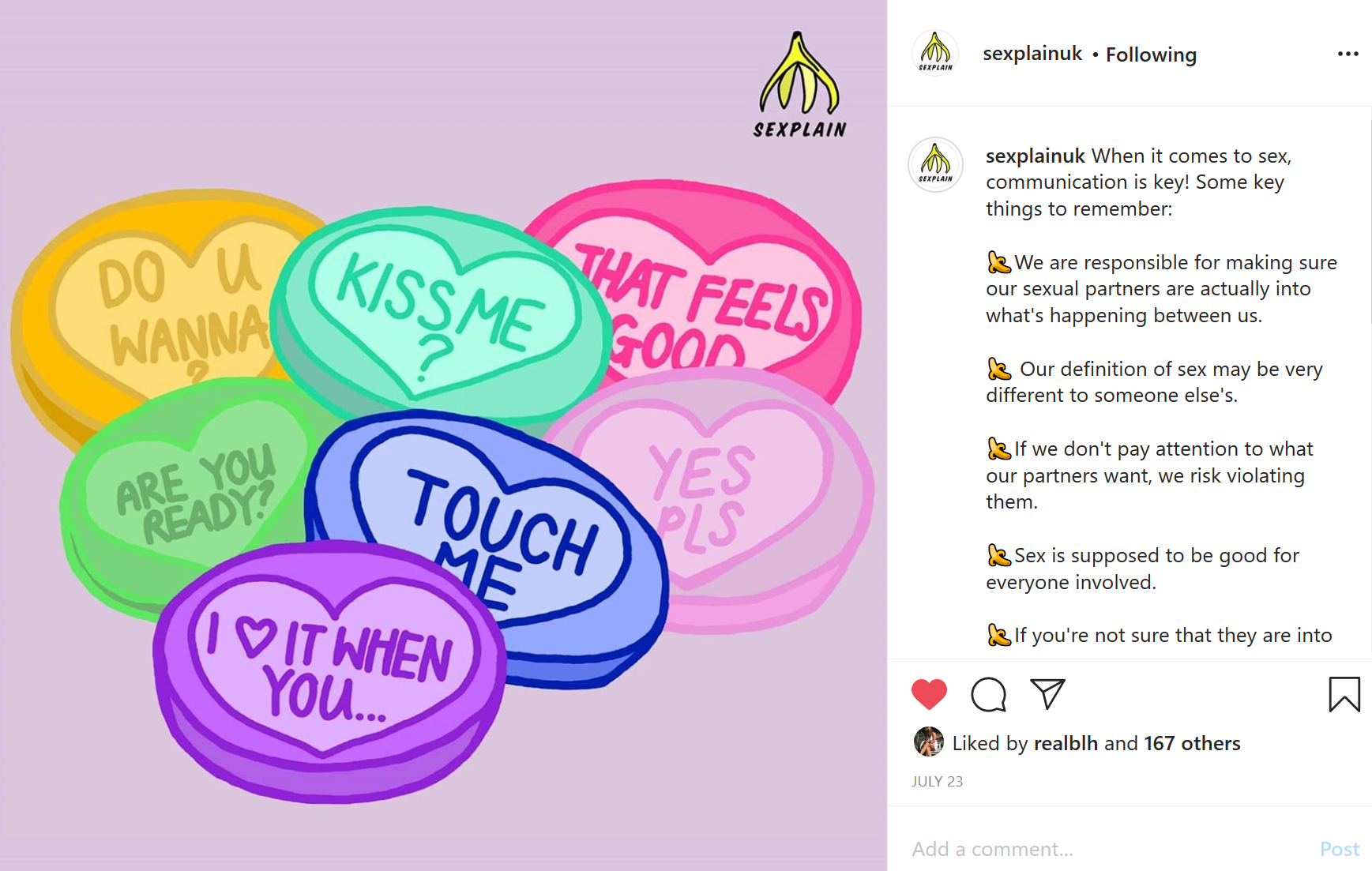
A couple of months ago, in July 2020, the School of Sexuality Education Instagram account was blocked and disabled. 

We received a message from Instagram stating that the account had been deactivated for not following ‘Community Guidelines’ because ‘sexually suggestive content isn’t allowed on Instagram’. This includes ‘posting sexually suggestive photos or other content; soliciting sexual services; using sexually explicit language.’ There was no specific information regarding which post(s) were problematic for Instagram, nor was there any warning of the deactivation. Considering the fun, educational tone of our account, the use of anatomically correct language, and the fact that most of our posts are illustrations this was baffling.

School of Sexuality Education reported this deactivation as an error but heard nothing from Instagram for a week. We went on to report it through Report Harmful Content who contacted their industry partners. After that our account was reactivated but with no further explanation. 

Both the team, and wider supporters of the work we do at School of Sexuality Education, were outraged. That Instagram had deemed the vital Sex Education work we do, to be in breach of the community guidelines, without specifiying what exactly it was that breached them, was beyond frustrating.
Sexplain IG.png

A number of independent studies have shown that internet policies around sexuality are consistently implemented in favour of straight, white, cis male ideas of acceptability, and that the censorship of benign Sex Education content on social media platforms is disproportionately harming marginalised communities.

Emoji censorship.jpg

How? Well, automated moderation, or algorithmic models, are used on a huge scale to automatically sort through content posted to social media platforms such as Instagram, Facebook, YouTube, TikTok etc. Facebook’s algorithmic model, for example, has now been programmed to spot commonly used emoji strings – such as the eggplant or peach emoji – which are commonly used to refer to fun sex acts or indicate certain sexual preferences.

Often, social media platforms will ‘shadowban’ – when a social media platform hides content from the algorithm with tactics such as making them invisible in the hashtags, banning liking/commenting, or continuously censoring their content – accounts using vocabulary or hashtags deemed unacceptable.

This means sex educators can’t even use code to talk about the pleasurable aspects of sex, or help LGBTQ+ people find information via hashtags, even when the content is non-explicit.

Salty, an online newsletter and platform for women, trans and non-binary people, conducted some research in 2019, which reported that that plus-sized profiles were often flagged on Instagram for “excessive nudity” and “sexual solicitation”, and concluded that “risqué content featuring thin, cis white women seems to be less censored than content featuring plus-sized, black, queer women.”

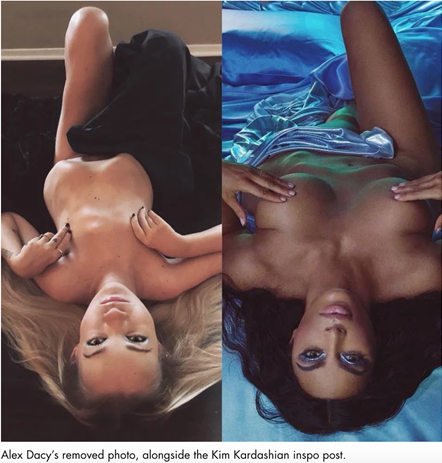
It also found that people who come under attack for identifying as a member of the LGBTQ+ community, for example, have had their accounts reported or banned instead of the attacker. And later this year, it also reported that wheelchair user Alex Dacy (a.k.a. @wheelchair_rapunzel) had her picture, below, banned, even though it was inspired by an accepted Kim Kardashian West photo.
IG Censorship.png

It is truly saddening how common real-life structures of oppression are being replicated online through this inherently biased automated moderation and censorship. It sends a deeply upsetting message, that only homogeneity is acceptable. School of Sexuality Education’s work is focused on dismantling these norms and online communities have the opportunity to help us do this work, but instead we are forced to stick to the same tired tropes.

Facebook also does not allow the mention of sexual pleasure in adverts for contraceptives. Instead, the focus must be “on the contraceptive features of the product.” A dichotomy exists because a cis man’s ability to have an erection is considered a health concern, based on the biological fact that a man must orgasm in order to procreate. As a result, male sexual wellness brands are considered morally acceptable as ‘family planning products’. Women, however, don’t need to experience an orgasm in order to procreate, so any information that exists solely to grant women pleasure is considered a ‘vice’ by Facebook.

This academic year sees Sex and Relationship Education become compulsory for all schools in England for the first time, hooray! But without being able to voice questions about the topic on social media, – which, as we know, is where young people spend a large proprtion of their time – they will still be left with the misconception that anything sex-related is taboo. And that’s the opposite of our ethos here at School of Sexuality Education. Social media bods, this is getting really tired – sort it out!

Illustrations by Evie Karkera, unless otherwise credited.

Our book ‘Sex Ed: An Inclusive Teenage Guide to Sex and Relationships’​is out​ ​now.

Why ‘virginity’ is a damaging social construct

By volunteer Katy Elliott, With contributions from School of Sexuality Education’s Dr Emma Chan.

3virginity lioness.jpg

During School of Sexuality Education's workshops, students ask us questions about virginity, and these largely come from a heteronormative perspective. In this piece, School of Sexuality Education volunteer Katy Elliott explores this perspective and why re-defining 'virginity' is important for all.

When I was a teenager, ‘virginity’ felt like quite a big deal. I spoke to my friends about ‘losing it’ and I worried I would be the last ‘virgin’ left. I thought ‘losing your virginity’ meant having penis-in-vagina sex and nothing else would count. I’d heard about the ‘hymen’ and worried that when I did have sex, I would bleed and it would be embarrassing. Quite frankly, virginity and sex made me anxious and scared.

I wish I’d had lessons from School of Sexuality Education to set things straight.

At School of Sexuality Education, we work to dispel the myths surrounding the traditional understanding of ‘virginity’. We help young people understand that sex means different things to different people and there is no right or wrong way to have it. We encourage people to do what feels right for them (and any partner/s) and not feel pressured into anything. And we try to deconstruct ideas around ‘virginity’ which can be heteronormative and contribute to gender inequality.

So, what is a social construct?

Put simply, a social construct is an idea created by society. It’s not always something concrete we can see, like rivers, mountains and oceans. Instead, social constructs are how we humans make sense of the world. Social constructs are driven by the ideas and beliefs which exist in our societies. The pressures, myths and expectations surrounding the traditional idea of ‘virginity’ are very much the product of norms and ideas created by us humans.

Why is the social construct of virginity damaging?

1. The focus on penis-in-vagina sex erases other experiences.

Contrary to what the traditional understanding of virginity would have you believe, penis-in-vagina sex is not the only way to have sex. Human beings are a glorious variety of wants, needs and preferences. Sex can mean very different things to different people. The most important thing is doing what feels right for you.

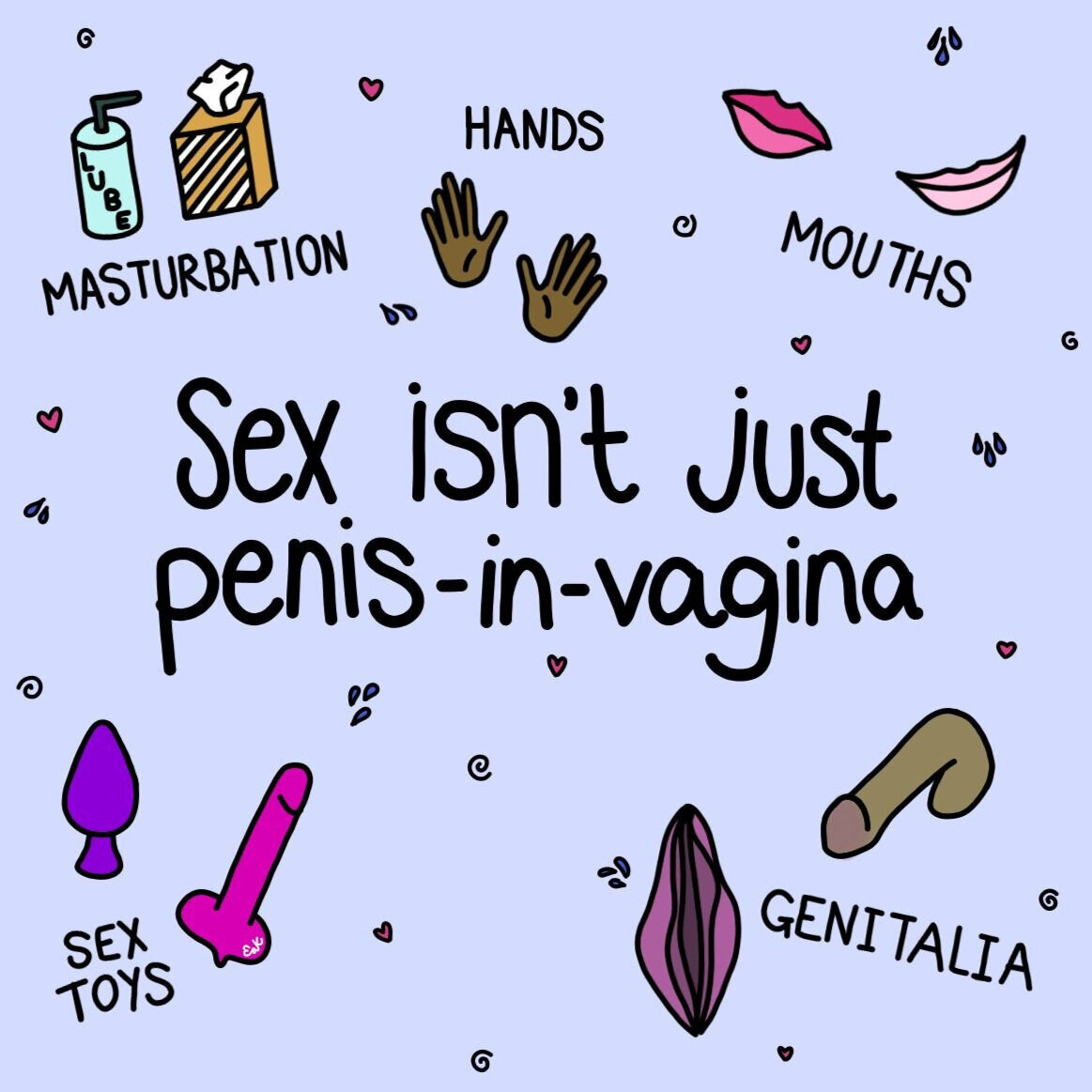
sex+isnt+just+blue+bg.jpg

School of Sexuality Education's definition of sex is 'anything that makes you feel horny or aroused'. This means that sex doesn't just have to be between a man with a penis and a woman with a vulva. It can take place between people of varying genders - the same or different to each other. It can take place between people with different or the same types of genitalia, even using different body parts. What makes some people 'horny' might not even involve genitalia (or other people) at all. Examples of sexual activities for some people include oral sex, anal sex, kissing, cuddling, massages, masturbation, and hand-play!

The traditional concept of virginity buys into the idea that the only type of sex that 'counts' is penetrative penis-in-vagina. This ignores the preferences, desires and lived sexual experiences of many people. In doing so it enforces a very particular heteronormative idea of sex and relationships on society.

In addition, many people with a vulva and vagina don’t orgasm from penetrative sex, and get the most pleasure from clitoral stimulation. But because our understanding of what it means to have sex is shaped by this idea of virginity, it’s often thought penis-in-vagina sex is the ‘main’ way to have sex, with the result that people don’t explore other parts of their body, for example the clitoris. Many miss out on a lot of pleasure because they don’t understand that other types of sex exist.

I’ve said it once, but I’ll say it again - the most important thing to remember here is that sex exists in many different wonderful forms and no single type of sex is the most important or valid. Regardless of your sexuality or gender, sex and pleasure is yours to define and experience in whatever way is best for you.

2. The association between purity and virginity serves to police women’s bodies

The idea of virginity equating to moral and personal purity has long been used to control some bodies - usually those seen as female, through a lens of gender as both binary and fixed. Examples of this can be found within ‘Purity Culture’. I spoke to my friend Katie Brookfield, an expert in this area, to give us her thoughts:

Virginity has long been a key factor in determining a ‘woman’s worth’ and therefore their bodies are heavily policed. The emphasis on virginity emerged as our ancestors moved from communal, hunter-gatherer communities to land-owning societies. Keeping land meant having (male) heirs, and therefore it was imperative that there be no question of parentage. The solution? Ensure that a wife or concubine is a ‘virgin’ to secure a pure lineage, land and, ultimately, power. 

My particular area of study is around the relationship between religion and sexuality. From Abraham to abstinence pledges, virginity has been a focal element of a woman’s purity and, consequently, their value. Whilst sexual purity has long been associated with religion  - in many ways because of the link between holiness and asceticism - it is in recent years that it has taken on a whole new dimension. Pervasive within the conservative Christian community, ‘purity culture’ has infiltrated not just churches, but schools, healthcare providers and even governments.

Proponents of purity culture are concerned with both physical and emotional purity, only allowing for two rigid, contrasting gender roles. There is a heavy emphasis on the purity of women and their responsibility to keep male counterparts from ‘stumbling’. They are both controlled by and the gate-keepers of this concept of purity. Physical appearance is heavily monitored, with strict rules on modest dress for young women who have to be aware of their hemline, neckline and even their eyeliner, to ensure men do not look at them lustfully. 

Young people are told to flee from the hypothetical ‘how far is too far’ line, yet this again is the responsibility of the woman. Men are painted as uncontrollable creatures who rely on a pure woman to keep their raging sexuality under wraps until the wedding night - an idea which contributes significantly to rape culture, FYI. Women, on the other hand, are taught nothing of pleasure and desire, but are instead told to ‘guard their heart’. They need to be as vigilant about guarding their emotional virginity as they are their physical. Why? Because whether physical or emotional virginity, a woman gives away a piece of her heart each time. She becomes damaged goods; a used, impure woman unable to give her whole self to her future husband. This ‘purity myth’ controls every aspect of a woman’s body: what they wear, what they think, and what they let between their legs.

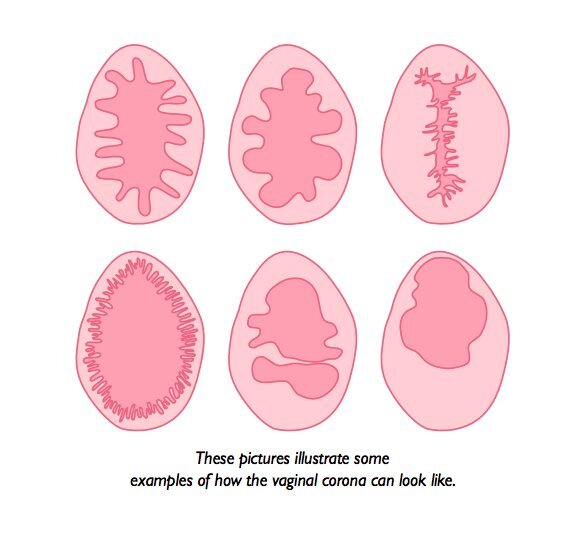
Vaginal Corona.jpg

3. The hymen is a myth

Like many people, I thought a hymen was a stretchy piece of cling film-like membrane which covered the vaginal opening. I thought it was the same for everyone and you could break it by inserting a tampon, riding a horse, or having penis-in-vagina sex. Turns out that isn’t the case. 

RFSU, a Swedish sex education charity actually prefer the term ‘vaginal corona’ which has no hymen-related myths associated with it. The vaginal corona is made up of folds of tissue and comes in lots of different shapes and sizes. If you deliver a baby vaginally, it can change and become less visible. And in very rare cases, it can cover the vaginal opening completely, requiring medical assistance because period blood can’t leave the body.

The link between hymens and virginity is a social construct. You can’t tell if someone has had sex by looking at their genitalia - the shape and size of the vagina doesn't change size with penetrative sex, nor does the hymen change from penis-in-vagina sex. You may have heard US rapper T.I. 's comments about accompanying his daughter to the gynaecologist each year to check her hymen (and therefore virginity) was still intact. This statement – quite rightly – caused outrage, not least because the practice of ‘virginity testing’ is condemned by the United Nations as a type of violence against women and girls. And also because what this young person decides to do with their body has absolutely nothing to do with their parent. 

In the book Vagina: A Re-education, Lynn Enright discusses how the incorrect belief that people with a vulva will bleed the first time they have sex can be very dangerous. In some cultures, if a person with a vulva does not bleed when having penis-in-vagina sex with their husband for the first time, this is seen as shameful. It can even be used to excuse violence against this individual. Because of this, some doctors in the UK and throughout the world offer ‘hymen repair’ procedures. The procedure involves stitching together vaginal tissue, which will break and cause bleeding upon penetrative sex. As with any surgery, this procedure comes with some risks. It’s also completely unnecessary from a medical perspective, existing purely because of social beliefs which mean it’s expected for a person with a vulva to bleed on their wedding night.

A new social construct?

Social constructs are shaped by human ideas and beliefs. They exist due to human ideas and beliefs. And they continue to exist because humans keep spreading these ideas and beliefs. In the case of virginity, this can be through sex education which puts a lot of focus on penis-in-vagina sex. It can be through religious and cultural ideas which are passed down through generations. It can be through portrayals of sex in movies and porn. And the dominant views and beliefs often win out, sometimes making social constructs resistant to change.

So maybe it’s time that we took charge and actively shaped the social construct of virginity for the better. By teaching young people that sex (and therefore virginity) means different things to different people. By acknowledging that all experiences of sex are valid. And the most important thing? That if, how and when you have sex has nothing to do with anyone else and everything to do with what’s right for you - and any sexual partner/s, of course.

**We have an online worksheet all about The Virginity Myth using teachable moment from Netflix’s ‘Sex Education’ (suitable for 16+) here.

Illustrations by Evie Karkera, unless otherwise credited.

Our book ‘Sex Ed: An Inclusive Teenage Guide to Sex and Relationships’​is out​ ​now.

Preparing to teach Relationships and Sex Education in secondary schools

School of Sexuality Education

Since September 2019, School of Sexuality Education has been working with academics at UCL’s Institute of Education – alongside other RSE experts and classroom practitioners – to develop and deliver a short course for trainee teachers. The course is the first of its kind, providing PGCE students with five full days spread across the 19/20 academic year to learn about the background and policy behind RSE in the UK, alongside vital topics such as gender and sexuality identity, consent, inclusivity and sexual health. The programme was developed as part of a knowledge exchange project with our partnership schools on the Secondary PGCE programme, to try and better understand the needs of teachers and schools in London in developing good practice in RSE.

This year, the course participants have included Social Science and Biology PGCE students with some specialists in Physics and Chemistry too. Student teachers opted into the course because they recognise the value of RSE and felt that developing expertise in the area would be important for their future careers in the classroom. The government has also recently acknowledged the need for comprehensive and up-to-date RSE in schools with the release of new guidance which states that the subjects involved ‘represent a huge opportunity to help our children and young people develop.’

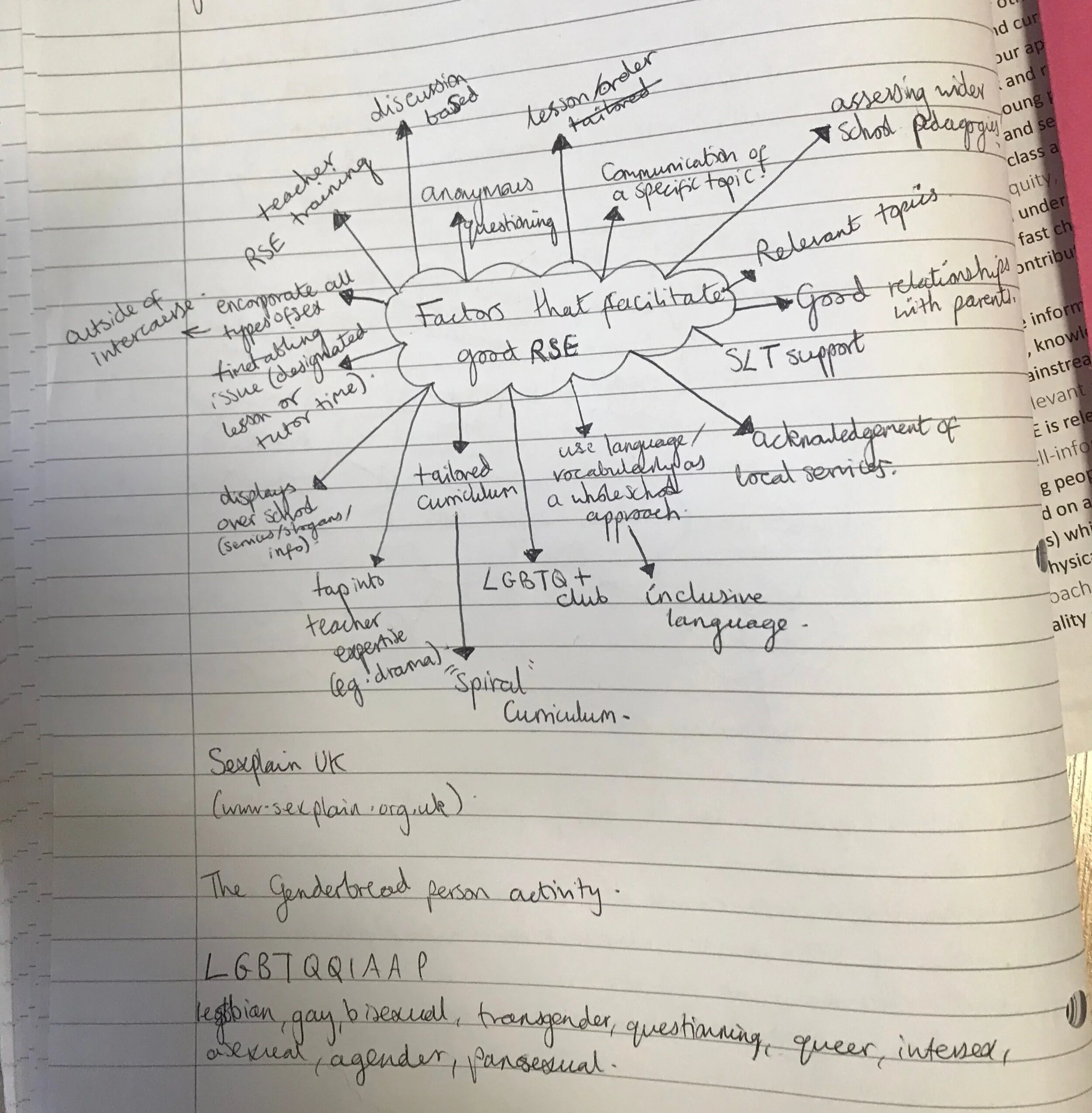
During the planning phase for the course, we supported the convenors (Sarah Worton and Alison Wiggins of UCL’s IoE) in designing a series of sessions to offer core RSE knowledge and practical teaching ideas while building an awareness of what a whole-school approach to gender and sexuality inclusivity might look like. The intention was to equip teachers with the skills, knowledge and confidence required to deliver high quality, progressive Relationships and Sex Education. Beyond that, we wanted trainee teachers to feel comfortable in supporting students who had questions or struggles outside of the classroom linked to their gender identity, sexuality or relationships.

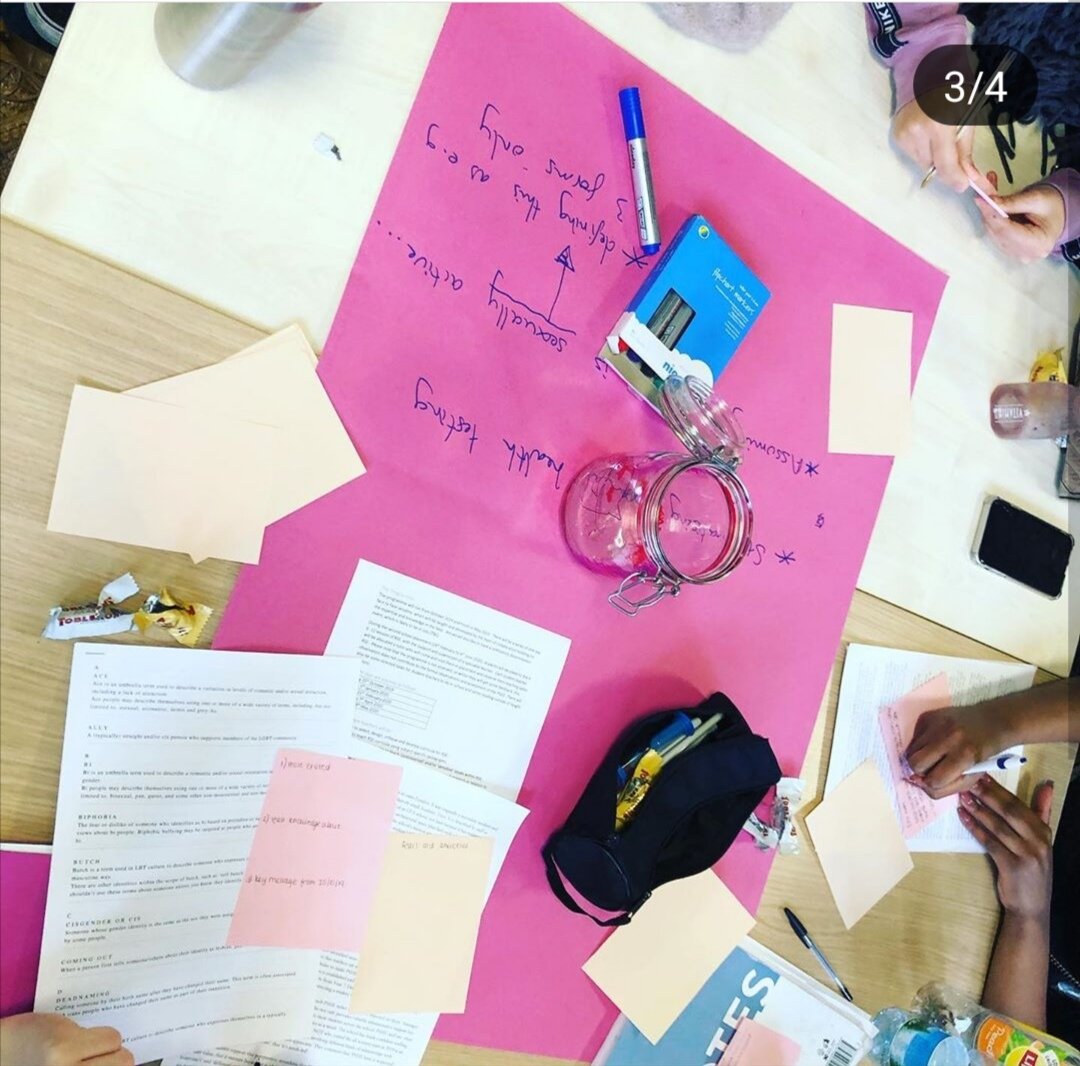
Sexplain RSE course UCL

On day 1, Professor Jessica Ringrose delivered an intro to gender, sexuality and RSE then School of Sexuality Education’s CEO and founder, Amelia Jenkinson, delivered an interactive session about how to challenge heteronormativity in schools. She shared resources, key points on language and links to government guidance to support trainee teachers in understanding the context of RSE while providing pragmatic classroom solutions. On day 2, trainee teachers heard from Dr Sara Bragg who applied queer theory to our understandings and assumptions around education and young people. Following this, the student teachers heard from Lucy Emmerson (director of the Sex Education Forum) and Rachael Baker (senior RSE specialist at the Sex Education Forum) who discussed the government 2020 RSE guidance and interrogated the idea of ‘age-appropriateness’ in RSE. For day 3, student teachers were visited by Professor Emma Renold (Cardiff University) who shared creative ideas and resources for the RSE classroom based on her work on the Agenda positive relationships resource. All of these days were supported by sessions and talks from the course conveners at UCL.

The ranging perspectives provided by these different professionals, paired with the expertise of tutors and classroom practitioners, has provided great layers of insight for the trainee teachers on the course. One noted that ‘having the guest speakers was helpful… it gave us a community and showed us the array of people that are out there’ while another said ‘I loved having a range of people involved…it’s a really positive thing to have people who have different backgrounds and experiences.’

IMG_4386.jpg

In the coming months, we hope to cement the learning of those first three days and will ensure that all the trainee teachers involved feel ready to try the ideas in the classroom in September. Being involved in the course has been a great experience for School of Sexuality Education – we’re thrilled to be part of a pioneering programme which is equipping the next generation of teachers with vital skills. We know that many existing teachers are keen to take part in this kind of training too. Like all subjects, educators need training to develop necessary knowledge, skills and confidence in order to teach well. In the coming months and years, we hope to develop opportunities like this one for all subject PGCEs and all teachers, wherever they are in their career. We want feelings of embarrassment to be replaced with empowerment, so that teachers can address important issues head on and support the young people in their care. We’re already certain that those involved in the short course this year will do just that!

If you’re interested in taking part in one of our future teacher training programmes, get in touch – we’d love to hear from you.

Illustrations by Evie Karkera, unless otherwise credited.

Our book ‘Sex Ed: An Inclusive Teenage Guide to Sex and Relationships’​is out​ ​now.


Are you a current, prospective or trainee teacher interested in this course? we’d love to hear from you! please email info@schoolofsexed.org